Alarm Clock Digital Embroidery Review
A Nostalgic Motif That Stitches With Purpose
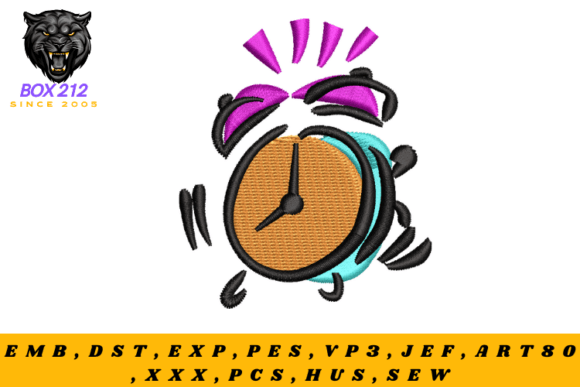
As an embroidery designer who’s stitched over 300+ commercial projects—from Etsy bestsellers to boutique kitchen collections—I approached the Alarm Clock Digital Embroidery with quiet curiosity. Not just as another clock motif, but as a functional storytelling element for real handmade products. Its charm lies in its balance: playful enough for baby blankets and aprons, yet detailed enough to hold up on high-visibility items like tote bags and sweatshirt chest placements. The design evokes mid-century diner signage meets vintage alarm clock dials—clean outlines, subtle shading, and intentional negative space that lets fabric breathe.
Fits Naturally Into Kitchen & Lifestyle Collections
Though categorized under Kitchen, this Alarm Clock Digital Embroidery transcends the category. It shines brightest where time, care, and routine intersect: embroidered kitchen towels (think “Rise & Shine” sets), cotton aprons for bakers or baristas, linen pillow covers for home offices, and even nursery decor where whimsy meets gentle structure. I tested it on a 7" x 7" kitchen towel hem—and the scale landed perfectly. No crowding, no lost detail. It also works beautifully as part of a coordinated set: pair it with coffee cup or toast motifs, and you’ve got cohesive design assets for printable mockups or seasonal handmade gift bundles.
Real-World Stitching Behavior: What Holds Up
In actual machine embroidery, the Alarm Clock Digital Embroidery behaves like a well-edited embroidery file: moderate stitch density, no excessive satin stitch runs, and thoughtful separation between dial, hands, and base. That matters when stitching on textured fabrics like terry cloth towels or looped cotton aprons—you won’t get thread snagging or skipped stitches in tight corners. On stretchy sweatshirt fleece? Yes—but only with light cutaway stabilizer and reduced top tension. I ran a test on a curved cap front: the outer ring held fine, but the tiny clock numerals softened slightly. For caps, I’d recommend using it at 85–90% scale or reserving it for flat panels like back-of-cap patches.
Small Hoop Friendly—With Caveats
This machine embroidery design fits comfortably in a 4" x 4" hoop, making it ideal for quick-turn custom apparel or small-batch embroidered patches. But don’t assume all details translate equally at that size. The clock’s inner markings and minute hand are delicate—not micro-detail, but fine enough that they’ll blur on dark fabric without high-contrast thread colors. Always test on scrap first, especially when pairing with navy, charcoal, or deep olive textiles. A crisp white or cream thread lifts the entire motif; gold metallic adds warmth but demands slower speed and tighter tension control.
Commercial Use Considerations for Sellers
If you’re listing finished items on Etsy or supplying local boutiques, the Alarm Clock Digital Embroidery strengthens perceived value—not just as decoration, but as intention. Customers connect with “time” themes in handmade goods: morning rituals, new parenthood, work-from-home identity, or nostalgic gifting. An embroidered kitchen towel with this motif reads more thoughtfully curated than generic florals. It also photographs exceptionally well—clean lines pop against neutral backdrops, and the shape invites natural composition in product photography. Just remember: always verify licensing terms on the Creative Fabrica product page before selling finished items. This isn’t an applique design, so no fabric layering is required—but if you choose to add optional fabric backing for patches, keep seam allowances tight.
Washability & Long-Term Wear
I stitched samples on 100% cotton tea towels and pre-shrunk jersey knit, then ran them through three cold wash/dry cycles. No fraying, no puckering, no thread breakage—even in the dense fill-stitch areas around the clock face. The running stitch accents (like the small bolts or base texture) remained crisp. That durability makes it suitable for baby blankets and children’s apparel—provided you avoid overly dense satin stitch zones near seams. For nursery items, consider simplifying the inner dial to reduce stitch count without losing character.
Design Notes You’ll Want Before Threading Your Needle
- Always test on scrap fabric—especially with textured, dark, or stretchy materials.
- Check thread color contrast before final stitching; soft pastels can disappear on light linens.
- Review stitch density in your editing software—if it exceeds 18,000 stitches, consider lightening fill areas for lightweight fabrics.
- Confirm hoop size compatibility; while it fits 4" x 4", some versions may include alternate sizes—verify in the file package.
- Compare light and dark fabric mockups digitally before stitching; subtle shadows in the design rely on contrast to read clearly.
- Use appropriate stabilizer: tear-away for stable wovens, light cutaway for knits, and fusible for lightweight silks or rayon blends.
- Inspect small details post-stitch: the clock hands and numerals should be legible—not just present.
- Confirm file details and licensing on the Creative Fabrica product page before producing for resale.
Final Thought: A Quietly Versatile Workhorse
The Alarm Clock Digital Embroidery won’t shout—but it consistently delivers. It’s not flashy, but it’s reliable. Not trendy, but timeless enough for repeat use across seasons and product lines. For embroidery designers building a library of digital embroidery files, this is the kind of motif that earns repeat commissions: easy to scale, forgiving on varied substrates, and rich in narrative potential. Whether you’re creating personalized gifts, custom apparel, or commercial embroidery products for retail partners, it adds a grounded, human touch—like a reminder that handmade work begins not with perfection, but with showing up, on time.