Crochet Flowers Embroidery Digital Paper
First Impressions: Soft, Whimsical, and Instantly Recognizable
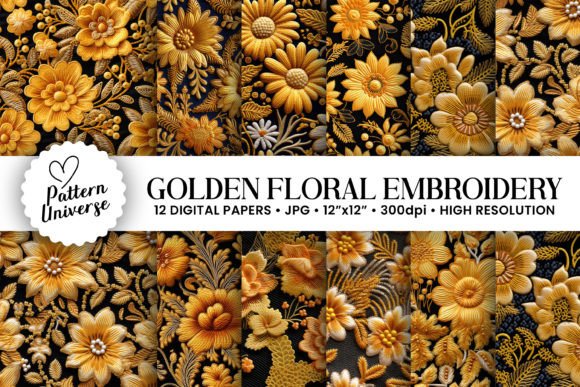
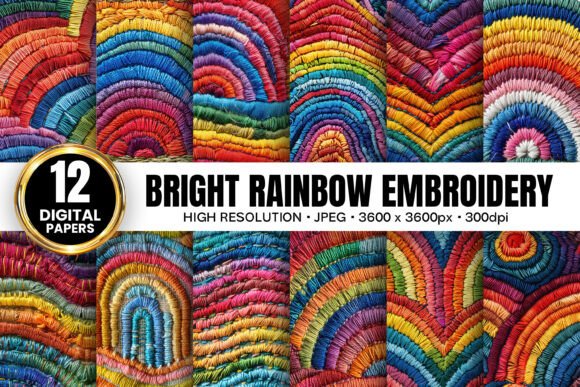
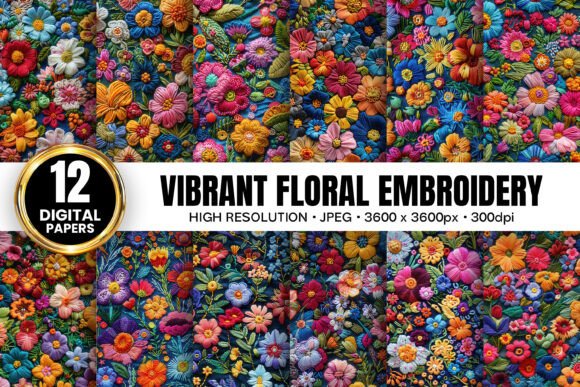
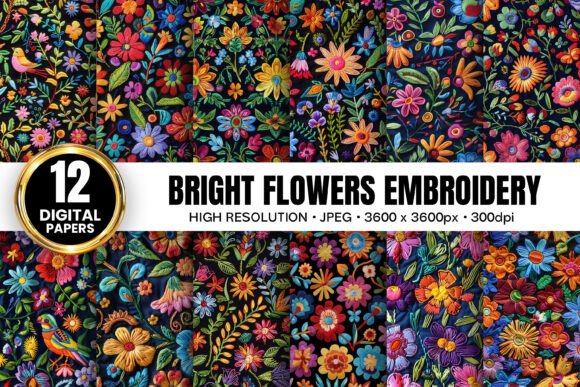
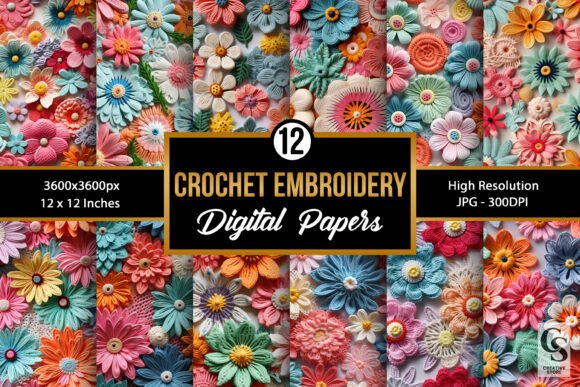
Opening the Crochet Flowers Embroidery Digital Paper zip file feels like flipping through a well-loved craft journal—twelve seamless patterns, each one radiating that gentle, handmade charm you’d expect from hand-crocheted blooms. These aren’t stiff or overly geometric; they’re organic, slightly asymmetrical, with subtle petal overlaps and soft edges that suggest texture before a single stitch is laid down. As a designer who’s stitched hundreds of floral motifs—from tight botanicals to bold tropical silhouettes—I immediately sensed these would translate beautifully into satin-stitched petals and delicate fill-stitch centers. The mood is warm, nostalgic, and quietly confident—not fussy, not trendy, but timeless enough for baby onesies, kitchen towels, and boutique aprons alike.
A Real-World Test: Stitching It on a Linen-Cotton Tote Bag
Last week, I used one of the Crochet Flowers Embroidery Digital Paper patterns to embroider a medium-sized tote for a local café’s gift bundle. I chose a light taupe linen-cotton blend—textured but stable—and paired it with matte cotton thread in sage, cream, and dusty rose. The result? A design that looked *hand-drawn*, not digitally generated. Because the patterns are high-resolution (3600 x 3600 pixels at 300dpi), scaling down to a 4″–5″ hoop size preserved fine details—especially the layered petal edges and slight “curl” at the tips. Customers noticed it right away: “It looks like someone crocheted it *then* embroidered it,” one said. That’s the sweet spot—where digital precision meets tactile warmth.
Where It Shines (and Where It Needs Thought)
The Crochet Flowers Embroidery Digital Paper excels in projects where softness and approachability matter:
- Personalized gifts: Baby blankets, nursery pillows, and holiday tea towels gain instant heirloom appeal—especially when paired with simple monograms or neutral thread palettes.
- Small business merchandise: As a craft business owner or Etsy seller, these patterns elevate basic items without overwhelming them. Think: embroidered sweatshirt cuffs, patch-ready applique designs for denim jackets, or subtle corner accents on linen napkins.
- Commercial embroidery: Their seamless nature makes them ideal for repeating borders on aprons, continuous bands on pillow covers, or all-over prints on lightweight scarves—no visible tile lines, even at full scale.
But—and this matters—don’t assume it’s universally forgiving. On thin fabrics like rayon challis or stretchy knits, dense fill-stitch areas may pucker without proper cutaway stabilizer. On dark fabric, fine inner details (like small stamens or petal veins) can disappear unless you adjust thread contrast intentionally. And on curved surfaces like caps or toddler hats, test the layout first: some flower shapes read better upright than angled.
Design Integrity Meets Customer Trust
Here’s what I watch for as a designer reviewing embroidery assets for real use: Does it look intentional, not generic? Does it hold up under close inspection? Does it feel cohesive with my brand voice? The Crochet Flowers Embroidery Digital Paper passes all three. Its consistent line weight, balanced negative space, and gentle scale variation across the twelve patterns mean you can mix and match confidently—say, using one as a focal motif and another as a subtle repeat background in a printable mockup. That cohesion builds customer trust: buyers recognize quality stitching *and* thoughtful design curation, whether they’re purchasing a finished product or licensing the pattern for their own shop.
Practical Designer Notes Before You Stitch
Before committing to your next project, take these steps:
- Test on scrap fabric first—especially if using textured, dark, or stretchy materials. Note how satin stitches lay over weave and whether fill density causes stiffness.
- Check thread color contrast by printing a black-and-white version of the JPG. If key details vanish, simplify or re-thread.
- Confirm hoop size compatibility. While the files are scalable, intricate center details may need a minimum 4″ hoop to resolve cleanly.
- Inspect corners and edges—some seamless patterns repeat more naturally along straight seams than around tight curves (like pocket flaps or cap brims).
- Review licensing terms before selling finished items or bundling the Crochet Flowers Embroidery Digital Paper into your own digital product offerings. The listing confirms it’s a Graphics asset—but commercial use rights depend on the creator’s policy.
- Use appropriate stabilizer. For apparel or frequently washed items (baby clothes, kitchen towels), a medium-weight tear-away + light cutaway combo gave me clean results without shadowing.
Final Thought: Not Just Pretty—Purposefully Designed
This isn’t just another floral pack. The Crochet Flowers Embroidery Digital Paper feels curated—not algorithmically generated. Each of the twelve patterns has its own quiet personality: one leans daisy-like and open, another curls inward like a vintage crochet motif, a third reads almost like a pressed botanical. That variety gives you flexibility without sacrificing unity. Whether you’re designing a custom embroidered patch for a wedding favor, updating your Etsy shop’s seasonal collection, or prepping a batch of personalized sweatshirts for a school fundraiser, these patterns support intention—not just decoration. They remind the wearer (and the maker) that embroidery isn’t just about filling space—it’s about inviting attention, slowing down, and honoring craft. That’s why, after testing dozens of floral embroidery files this year, the Crochet Flowers Embroidery Digital Paper is now in my go-to folder for both client work and personal makes.