Little Red Robot Embroidery
A Cheerful, Heart-Fueled Spark for Craft Fair Booths
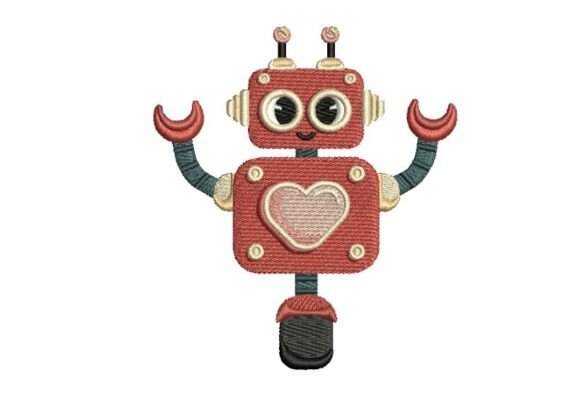
As an embroidery designer who’s packed, stitched, and sold at over 40 craft fairs—from snowy holiday markets to sun-drenched summer pop-ups—I know exactly what makes a design stop shoppers mid-aisle. The Little Red Robot Embroidery lands with instant charm: it’s bold but not loud, modern but warmly approachable, and undeniably *human* in its playful heart-centered storytelling. That “cheerful, heart-themed robot in vibrant red tones” isn’t just descriptive—it’s emotional shorthand. Customers see joy, kindness, and whimsy before they even read the tag. It reads as friendly, contemporary, and giftable—not rustic, not vintage, not minimalist. Think “modern handmade,” with a pulse.
Where Little Red Robot Embroidery Shines On Real Products
This design thrives where personality meets utility. On a sturdy cotton tote bag, it pops cleanly at 4–5 inches wide—large enough to read from three feet away, small enough to leave room for branding or a subtle monogram. As apron embroidery? Perfectly scaled above the pocket or centered on the bib, it adds warmth without overwhelming the garment’s function. For tea towel embroidery, place it near the corner hem: the vibrant red threads hold beautifully against natural linen or oatmeal cotton, and the heart emblem reads clearly even after repeated washing (provided proper stabilizer is used).
As an embroidered patch, Little Red Robot Embroidery is a standout. Its clean outlines and balanced negative space mean it’ll hold crisp edges when heat-applied or sewn onto denim jackets, backpacks, or kids’ lunchboxes. On fabric pouches and small pillow covers, it works beautifully at 3 inches—small enough for intimacy, large enough to retain expression. And yes—it’s strong booth bait. I’ve watched toddlers point and grandparents smile when this robot appears on a market bag sample. It bridges age groups, genders, and aesthetics without trying too hard.
What Makes It Sell—And What Requires Care
The Little Red Robot Embroidery earns trust fast: it’s instantly legible, emotionally resonant, and feels handmade—not digitized or generic. That smile reads across a crowded fair floor. Its heart chest emblem gives it narrative weight, making it more than decoration; it becomes a tiny story you can carry. That lifts perceived value on finished products, especially for Etsy sellers and small shop owners positioning their goods as thoughtful, intentional handmade product.
But real-world production demands attention. Because it’s described as “cheerful” and “playful,” expect expressive curves and soft angles—not rigid geometry. That means stitch density may vary across arms, face, and heart. Before batch production, test the embroidery file on your target fabrics: dense areas (like the robot’s outline or heart fill) can pucker on lightweight cotton or shift on textured towels. On curved cap surfaces, the design will need careful hooping and possibly reduced size—don’t force it past 3.5 inches without testing. Dark fabric? Confirm thread colors provide contrast—vibrant red alone may mute on burgundy or navy unless paired with white or metallic accent threads.
Smart Production Moves Every Embroiderer Should Make
- Always test on scrap fabric—especially if using tea towels, canvas totes, or structured caps.
- Check thread contrast before stitching full runs—what looks vivid on screen may fade on oatmeal linen or charcoal denim.
- Review spacing and stitch density in your embroidery software: avoid overcrowding on small items like patches or pouches.
- Confirm hoop size compatibility—if your machine uses a 4x4 hoop, ensure the design fits comfortably with seam allowance.
- Use the right stabilizer: medium-weight cutaway for stable fabrics, tear-away for lighter cottons, and adhesive+cutaway for towels or napkins.
- Create at least one real mockup—not just a printable mockup—before ordering 50 tote bags. See how light hits the stitches, how the robot sits on the curve of a bag handle, how the heart reads in person.
- Compare fabric colors side-by-side: red thread on cream vs. ivory vs. natural unbleached cotton yields very different moods.
- Confirm commercial licensing before selling finished products—this is non-negotiable for Etsy sellers, craft fair vendors, and boutique makers.
Why This Design Strengthens Your Entire Booth
In a sea of florals, typography, and seasonal motifs, Little Red Robot Embroidery delivers consistent visual appeal and buyer engagement. It doesn’t shout—but it *connects*. That matters when someone walks past your table twice before stopping. It also supports brand consistency: whether stitched on a tea towel, patch, or pillow cover, the robot carries the same joyful tone. That cohesion builds recognition, especially for repeat craft fair shoppers or returning Etsy customers.
For digital sellers offering embroidery files, this design stands out in search results for “robot embroidery,” “heart embroidery,” and “cute machine embroidery design”—keywords with steady, year-round volume. Paired with strong printable mockups showing it on multiple product types, it converts well for digital embroidery file buyers. And for makers producing physical craft fair product? It’s versatile enough for beginner stitchers yet distinctive enough to command premium pricing among discerning handmade shoppers.
Final Thought: It’s Not Just a Design—It’s a Conversation Starter
I’ve watched customers pick up a robot-embroidered pouch and say, “Oh—that’s my kid!” or “My husband’s a robotics teacher.” That’s the power of Little Red Robot Embroidery: it invites stories. In a handmade market saturated with repetition, that human resonance is rare—and valuable. It’s not just another toy-themed embroidery. It’s a small, stitched heartbeat in a busy world. Get the details right—stabilizer, thread, scale—and it won’t just sell. It’ll be remembered.