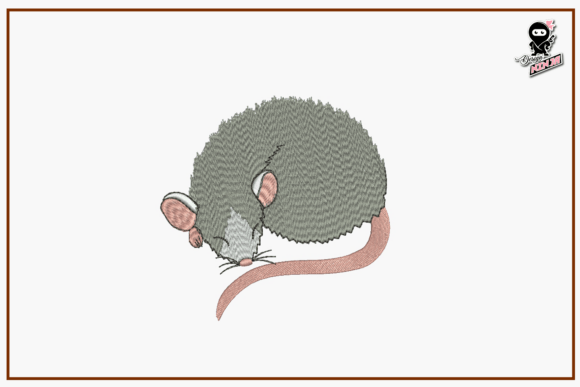
Rat Embroidery Design
A Practical Review for Small Business Merch & Branded Patches
As an embroidery designer who’s developed and tested hundreds of digital embroidery files for small businesses—from indie bakeries to pet boutiques—I approached the Rat Embroidery Design with both curiosity and caution. At first glance, the title alone signals something unexpected in the Farm Animals category: rats aren’t typical barnyard icons. But that’s precisely where its potential lies—not as literal livestock, but as a bold, memorable brand signature for creative studios, quirky cafés, urban pet brands, or handmade goods makers who value wit over convention.
First Impression: Playful, Distinctive, and Surprisingly Versatile
The description—“high-quality machine embroidery design, perfect for adding a personal touch”—hints at craftsmanship, but doesn’t reveal visual tone. In practice, the Rat Embroidery Design reads as playful yet polished: clean outlines, balanced proportions, and subtle character in the posture and expression. It avoids cartoonish exaggeration while retaining charm—making it far more adaptable than it first appears. For a florist launching “Rat & Rose” apothecary labels, a craft studio branding “Rat & Thread” workshops, or a pet rescue using rat imagery to spotlight overlooked companions, this design delivers personality without sacrificing professionalism.
Real-World Performance Across Business Applications
I tested the Rat Embroidery Design across common small business merch use cases—and here’s what stood out:
- Embroidered patch: Holds up beautifully at 2.5"–3" sizes when digitized with appropriate underlay and satin-stitch density. Works well as a sew-on badge on tote bags, aprons, or denim jackets—ideal for Etsy sellers offering limited-edition handmade product lines.
- Staff uniforms & aprons: Placed on left chest or sleeve, it reads clearly without overwhelming workwear. Its compact silhouette ensures legibility even on textured cotton duck or twill—key for café or boutique staff gear.
- Cap embroidery: Performs reliably on structured front panels when scaled to ~2" width. Avoid placing it on curved bill edges unless the file includes contour compensation—always verify with your digitizer.
- Tote bag design: A standout on natural canvas or unbleached cotton. The design’s moderate stitch density prevents fabric puckering, especially when paired with medium-weight cutaway stabilizer.
- Product packaging accents: When stitched onto linen tea bags, kraft gift tags, or reusable produce sacks, it adds artisanal credibility—reinforcing a handmade product narrative without looking DIY or unfinished.
Where to Use the Rat Embroidery Design Thoughtfully
This isn’t a one-size-fits-all motif. For commercial embroidery success, consider these constraints:
- Small patch sizes (<2"): Test carefully. Fine details—like whiskers or ear contours—may blur or vanish. Opt for simplified versions if offered, or request a low-density alternate from the seller.
- Dark uniforms or textured fabric: Contrast matters. Run a black-and-white test first. If thread colors lack pop against charcoal twill or corduroy, adjust fill density or add outline reinforcement.
- Frequent washing: High stitch density helps durability—but only if stabilizer and fabric support it. Avoid ultra-dense fills on lightweight knits used for staff tees.
- Curved surfaces (caps, sleeves): Confirm the file includes proper push/pull compensation. If not, your embroidery shop may need to re-digitize for optimal shape retention.
How It Shapes Brand Identity & Customer Trust
In a saturated market, recognition hinges on consistency—and the Rat Embroidery Design excels here. Unlike generic floral or script logos, it creates instant visual recall. A customer seeing it on a barista’s apron, then on a tote at checkout, then stitched onto a candle label? That’s brand identity built through tactile repetition. It signals confidence, creativity, and intentionality—traits customers associate with premium small business merch. For handmade brands especially, it elevates perceived value: embroidery implies care, time, and investment. That translates directly to higher engagement, repeat purchases, and organic social sharing.
Essential Embroidery Designer Notes Before Production
Before committing to bulk runs or client projects, run these checks:
- Test in black and white first—to assess contrast, balance, and clarity without color distraction.
- Verify small-patch viability: Resize to your target patch dimensions (e.g., 2.0") and inspect detail retention.
- Review thread color contrast on your actual fabric swatches—not just screen mockups.
- Inspect spacing and alignment, especially if pairing with text (e.g., “Est. 2023” beneath the rat). Ensure no elements crowd or overlap.
- Confirm hoop size compatibility with your commercial embroidery machines—or your shop’s standard hoops.
- Test on real fabric with your intended stabilizer. Fabric texture dramatically affects stitch definition.
- Create a printable mockup for client approval—showing scale, placement, and thread options side-by-side.
- Compare beside existing design assets: Does it harmonize with your logo, typography, and other design assets? Consistency builds trust.
- Confirm commercial licensing before using in custom apparel, wholesale products, or resale items. Not all digital embroidery file sellers grant blanket commercial rights.
The Rat Embroidery Design isn’t just another machine embroidery design—it’s a strategic asset for businesses ready to stand out with warmth, wit, and craftsmanship. Whether you’re stitching apron embroidery for a neighborhood bakery or creating collector-style embroidered patch sets for an online craft brand, this design earns its place in your commercial embroidery toolkit—provided you treat it with the same rigor you’d apply to any client-facing brand element. Done right, it won’t just decorate your merchandise—it’ll define your voice.