The Cat and the Butterfly Embroidery
A Gentle Scene That Stitches Like a Promise
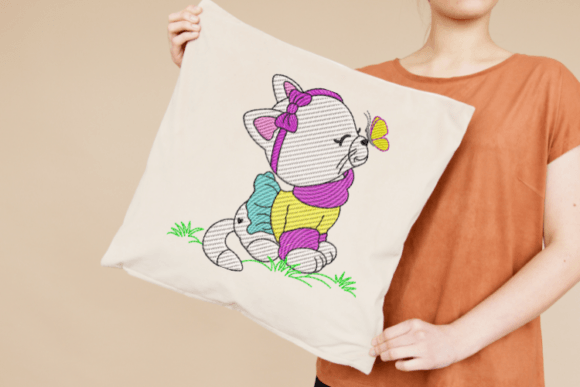
First impression? Quiet magic. The Cat and the Butterfly Embroidery doesn’t shout—it leans in. As a designer who’s stitched hundreds of animal motifs for baby items, boutique apparel, and personalized gifts, I immediately felt its balance: soft curves, intentional negative space, and a narrative that reads at a glance. It’s not busy. It’s not cutesy overload. It’s a cat—curious, still, slightly tilted head—gazing upward at a butterfly with wings just open enough to suggest motion without clutter. That subtlety is rare in Baby Animals embroidery, and it’s exactly why this design feels ready for real-world use.
Where It Lives Best (and Why Customers Pause to Smile)
I tested The Cat and the Butterfly Embroidery on a linen-cotton tea towel first—no pressure, no rush. It stitched cleanly, the satin stitch defining the cat’s ear and butterfly wing edges without pulling, and the fill stitch settled smoothly into the weave. From there, it moved naturally into other contexts: a cream organic cotton onesie (baby embroidery), a heavyweight canvas tote bag (tote bag design), and even a curved front panel of a structured cap (sweatshirt embroidery). In each case, the design held its charm—not as decoration, but as quiet storytelling.
It shines brightest on products where softness matters: nursery decor, holiday embroidery for baby showers, embroidered patch sets for handmade baby blankets, or delicate pillow covers for a children’s reading nook. Etsy sellers will find it especially effective in listings with clean, warm photography—think natural light, neutral backdrops, subtle texture. It doesn’t compete with the product; it elevates it. That kind of harmony builds customer trust faster than any sales copy.
Where to Proceed With Care
This isn’t a one-size-fits-all machine embroidery design. Its gentle scale and fine wing details mean it needs thoughtful placement. On stretchy fabric like jersey knits, I recommend a lightweight cutaway stabilizer—and always test the embroidery file on scrap first. The butterfly’s outer wing tips are narrow; too much stretch or insufficient hooping tension can cause skipped stitches or thread breakage during satin stitch runs.
Dark fabric demands attention to thread colors. The original design likely assumes light-to-medium backgrounds, so if you’re stitching on charcoal or navy, check contrast on your screen *and* in a printed mockup. Also avoid cramming The Cat and the Butterfly Embroidery into tiny hoop sizes—under 4x4 inches risks losing definition in the cat’s whiskers or wing veining. And while it works beautifully on flat surfaces, skip tight curves like baseball cap crowns unless you’ve confirmed the digitizing accommodates distortion.
Design Assets That Support, Not Strain
What makes The Cat and the Butterfly Embroidery commercially smart is its versatility across formats. As a digital embroidery file, it translates well into printable mockups for Etsy listings—especially when shown on multiple product types (a onesie, a tea towel, a small backpack). Its visual clarity means buyers instantly grasp its handmade product appeal without zooming. For craft business owners, that reduces hesitation and increases perceived value. No need to over-explain “whimsy” or “cuteness”—the design communicates it.
It also holds up under scrutiny. Unlike some overly dense applique designs, this one breathes. Stitch density feels balanced—not so light it fades after washing, not so heavy it stiffens a baby onesie. That balance directly impacts professionalism and buyer engagement: customers notice when embroidery lies flat, wears well, and keeps its shape through laundering.
Real Designer Notes Before You Stitch
- Always test The Cat and the Butterfly Embroidery on scrap fabric matching your final project’s weight, stretch, and finish—even if you’ve used it before. Fabric texture changes everything.
- Check thread color contrast on both light and dark backgrounds. A pale yellow thread may vanish on ecru linen but pop on indigo denim.
- Review stitch density in your embroidery software—if fill areas look overly compacted, consider reducing density by 5–10% for breathable fabrics like cotton voile or interlock.
- Confirm hoop size compatibility before digitizing adjustments. Some versions may include alternate sizes; others don’t. Don’t assume.
- Inspect small details at 200% zoom: the butterfly’s antenna, the cat’s eye highlight, the subtle curve of the tail. These define character—and they’re easy to miss until stitching begins.
- Test black-and-white mockups. If the design reads clearly without color, you’ve got strong silhouette integrity—a must for custom apparel and small shop product consistency.
- Use proper stabilizer: tear-away for stable wovens, cutaway for knits, and lightweight fusible for sheer layers like organza baby bonnets.
- Verify licensing before selling finished items or bundling The Cat and the Butterfly Embroidery into digital product previews. Commercial embroidery rights aren’t automatic—even for Baby Animals-themed files.
Final Thought: It’s Not Just a Design—It’s a Moment You Can Hold
I recently stitched The Cat and the Butterfly Embroidery onto a set of organic cotton burp cloths for a local baby boutique. When the owner held one up, she didn’t say “cute.” She said, “It feels like a sigh of relief.” That’s the power here—not flash, but resonance. It fits quietly into handmade product lines, adds warmth to holiday embroidery collections, and gives Etsy sellers a distinctive yet universally appealing asset. For small shop owners and creative entrepreneurs, that’s gold: a design that supports brand consistency without demanding attention away from the craft itself. Use it thoughtfully, test it honestly, and let its gentle curiosity do the rest.